Commercial Lease Agreement
$645 includes GST
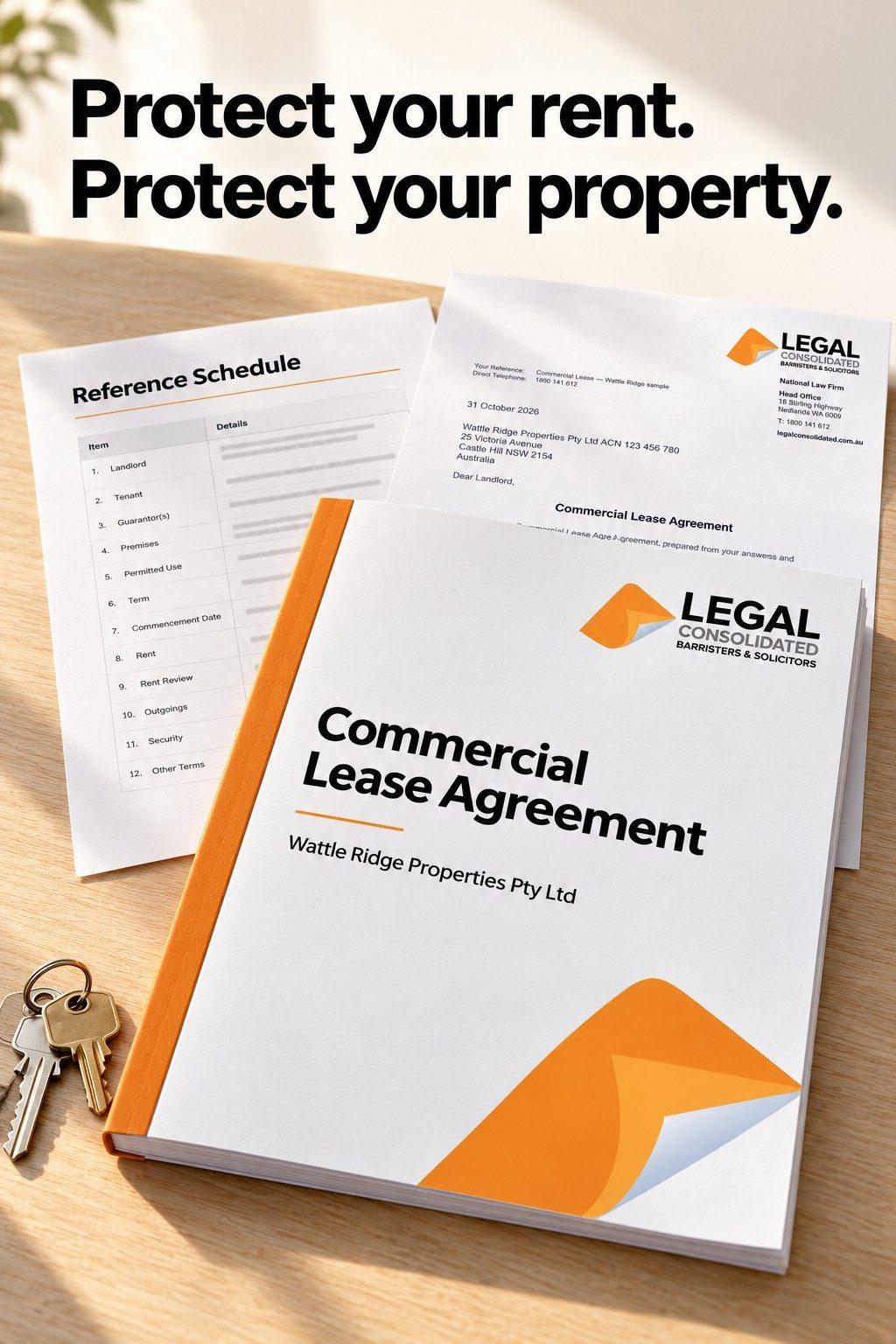
Includes:
- Commercial Lease Agreement
- Your Reference Schedule
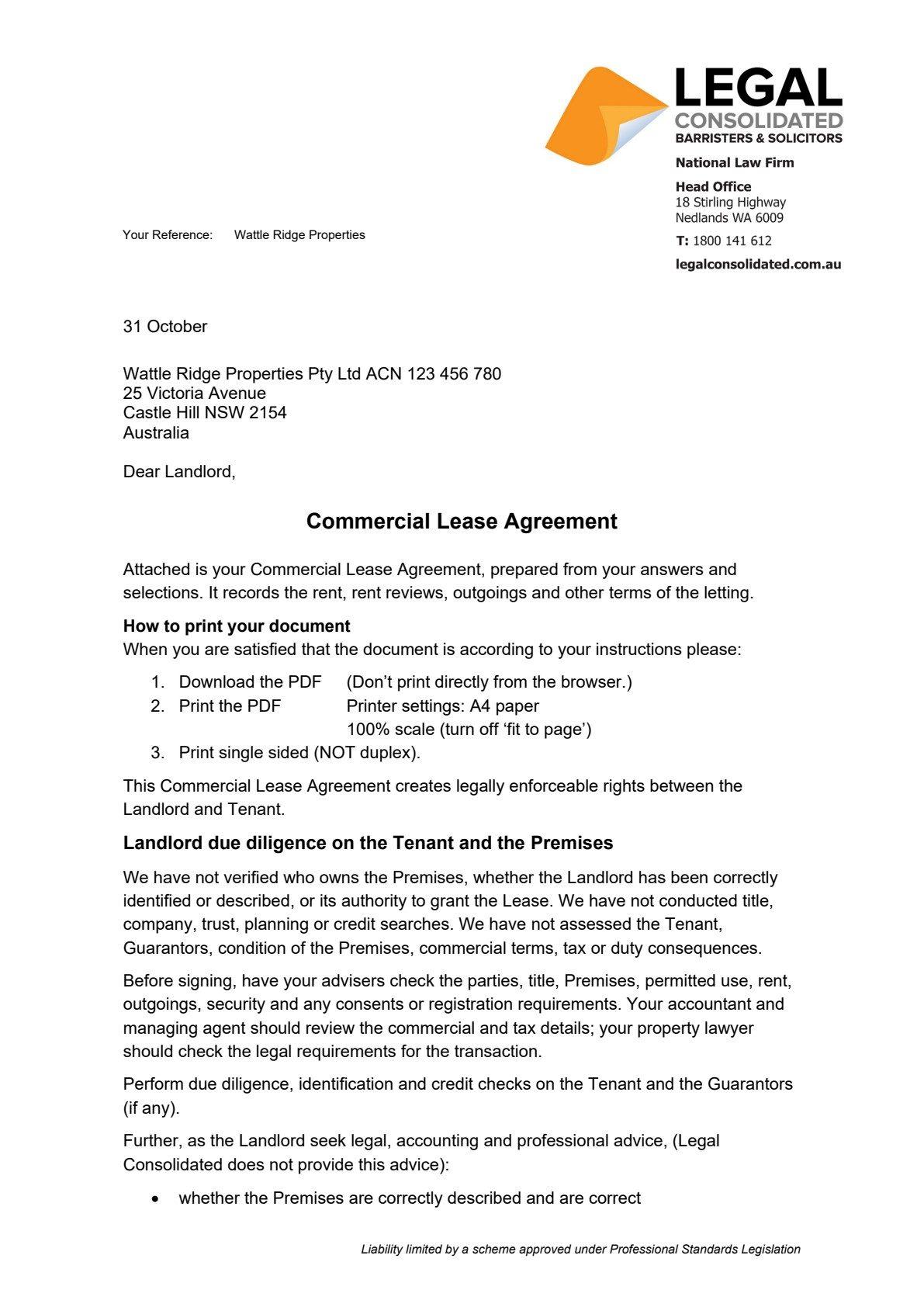
- Law firm’s cover letter and instructions
- Rent reviews, outgoings and guarantee provisions
Includes:
Leasing law is biased against the Landlord in Australia. Fight back by getting your Tenant to sign a Legal Consolidated Commercial Lease.
Your tenant gets the keys. You need the rent paid, the property looked after and a clear way to deal with a default. Put those obligations in writing before the tenant moves in.
Legal Consolidated prepares your Commercial Lease Agreement from your answers. Set the rent, bond, rent reviews, outgoings and permitted use. Add guarantors and an option to renew where you agree to them.
The rent stops. Your mortgage, rates and insurance do not. A vague promise to catch up gives you little comfort.
Our Commercial Lease sets out the tenant’s payment obligations, the consequences of default and your rights to recover possession and claim loss. Its damages provisions address unpaid rent, reletting costs and the rent lost during the remaining term, with credit for replacement rent and steps to reduce the loss.
Your bond provides another source of recovery. Keep the rent ledger and follow the lease’s notice requirements when you enforce your rights.
The company signs the lease. But what if that company has no money? A director does not become personally liable for the rent merely by signing for the company.
Add a guarantor when you build your Legal Consolidated Commercial Lease. The guarantee covers the tenant’s obligations under the lease, including rent, outgoings and the cost of dealing with a default. You then have another person to pursue if the tenant fails to pay.
Choose a guarantor with the means to meet those obligations. The guarantee needs its own proper execution. If you later agree to a material change that increases the guarantor’s liability, obtain the guarantor’s written consent.
A five-year lease should not leave you arguing about rent each year. Agree the dates and methods at the start. Our building process lets you add each rent review to your Reference Schedule.
Choose different methods for different dates. The lease records your selections and sets out how the reviews work. Diary the dates so the agreed reviews do not slip past.
The air conditioning fails. The tenant damages a door. The rates notice arrives. Who pays?
Your Reference Schedule allocates outgoings between the landlord and tenant. Our Commercial Lease deals with maintenance, repairs and insurance, including exceptions for matters such as structural work and inherent defects. Read the allocation and the repair clauses together.
Settle these costs before signing. A clear allocation protects your rental return and gives both parties a written answer when a bill arrives.
You want the premises back, ready for the next tenant. Our lease addresses the condition of the premises, removal of the tenant’s property and outstanding obligations at the end of the tenancy.
Record the condition at the start with photographs and an inspection report. Compare it with the condition when the tenant leaves. That evidence supports a claim for damage or work the tenant should have completed.
The lease also contains a limited power of attorney to deal with specified matters, including lease-related interests on title. It is a practical mechanism for the situations described in the lease, not an unrestricted power over the tenant.
You receive finished documents prepared from your answers by Legal Consolidated, a national Australian law firm. Download the sample above to see the document’s layout and provisions.
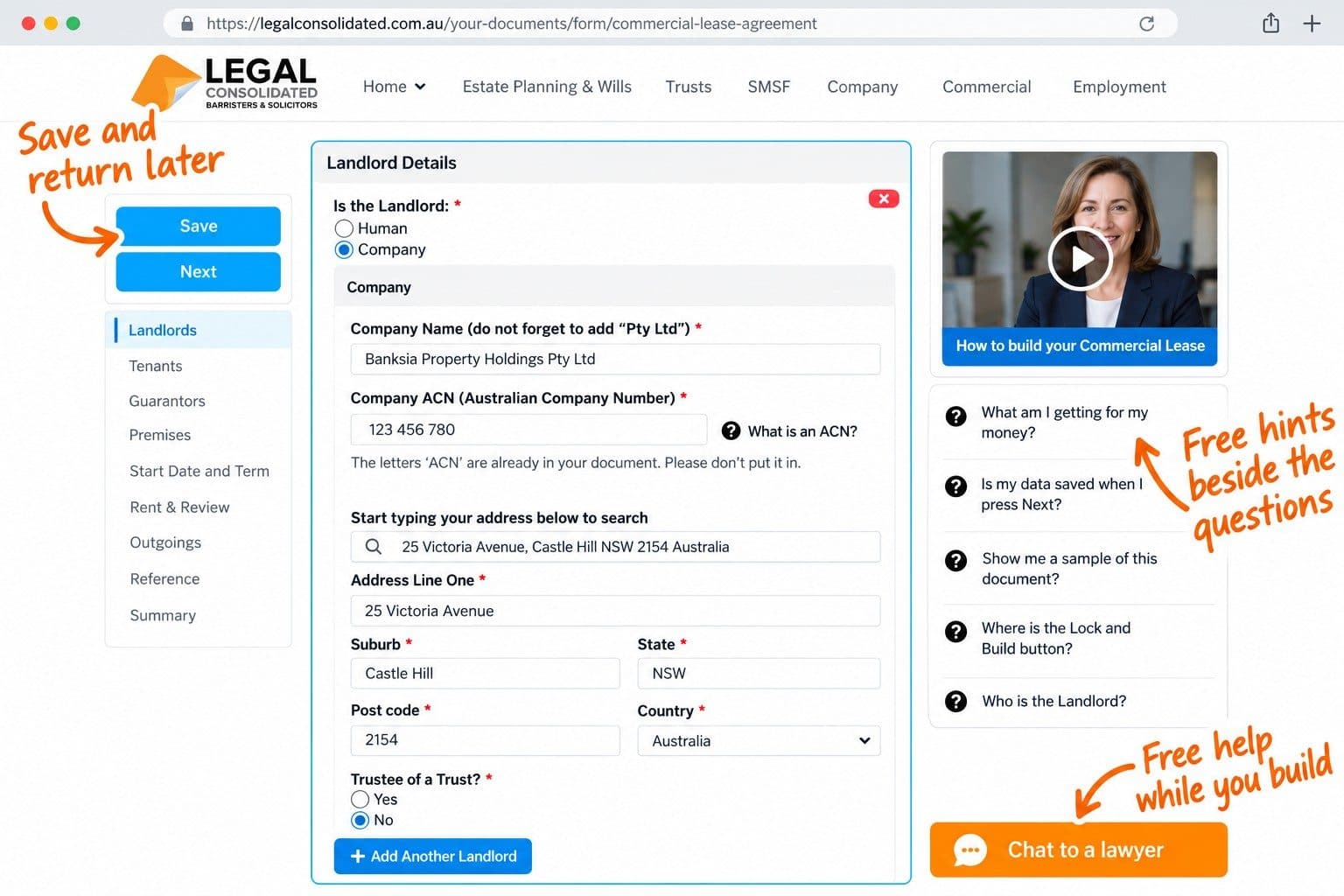
Start building for free. Read the hints beside the questions and watch the training videos. Save your answers and return later.
Free help is available while you answer the building questions. Use “Chat to a lawyer”, call 1800 141 612 or email lawyer@legalconsolidated.com.au. Once every section has a green tick, “Lock and Build” appears.
An option gives the tenant the right to extend the lease on the agreed terms. A “5 × 5 × 5” arrangement means an initial five-year term and two options of five years each. It could keep the premises leased for 15 years.
That is a valuable right. Consider your plans to sell, redevelop or occupy the property before granting it. In return, an option may help you retain a reliable tenant who invests in the premises.
Our lease records the number and length of the options you select. The tenant must exercise the option by the required notice and meet the applicable conditions. Check the deadline and the starting rent for the renewed term. A new lease instead requires fresh agreement between landlord and tenant.
You chose the tenant and agreed what happens at your property. A sublease brings in another occupier. A change of use may introduce noise, hazards or planning problems.
Our Commercial Lease restricts assignment, subletting and changes of use without the required landlord consent. It also addresses signs and alterations. Record approvals in writing so everyone knows what you agreed.
The permitted use does not replace council or other approvals. Check that the proposed activity is lawful at the premises before signing.
Handing back the keys does not, by itself, end a fixed-term lease. Check your rights before accepting a surrender or agreeing to release the tenant or guarantor.
Our lease addresses default, termination and recovery of loss. If you negotiate an early exit, record the date, payments, repairs and any release in writing. Keep evidence of reletting efforts and costs.
The business grows. The parties agree to different terms. Record the change clearly rather than relying on a conversation.
Our Commercial Lease includes waiver and variation provisions. Follow them when documenting a change, and obtain any required guarantor consent. A casual email exchange is not a substitute for checking the signing and registration requirements.
This document is for non-retail commercial premises. Retail leasing laws give tenants mandatory rights and impose additional requirements on landlords.
The label on the building does not decide the issue. An office or warehouse may fall within retail leasing legislation, depending on the State or Territory and the use. Have your advisers check the classification before signing. Telephone us if you need a retail lease.
Read the NSW retail tenancy guide or the Victorian Small Business Commission’s explanation of retail premises. Mandatory laws prevail where they apply.
SMSF property raises additional questions about related parties, market rent and the fund’s records. Visit our SMSF Commercial Lease Agreement page for those issues and a sample prepared for an SMSF landlord.