What happens in your Will if a child dies before you?
A mother had four children, but one had already died before her.
Her Will said everything to my:
'children as shall survive me'.
Five words that cost the family a court case.
The surviving grandchildren — the children of the dead child — got nothing under the Will. They had to go to court to claim what their dead parent would have got. The ACT Supreme Court in In the Estate of Koppie [2019] ACTSC 106 ultimately found in their favour. But only because of a statutory anti-lapse provision that stepped in to save the grandchildren. Not because the Will said so. The Will was silent.
The legal fees were paid from the estate.
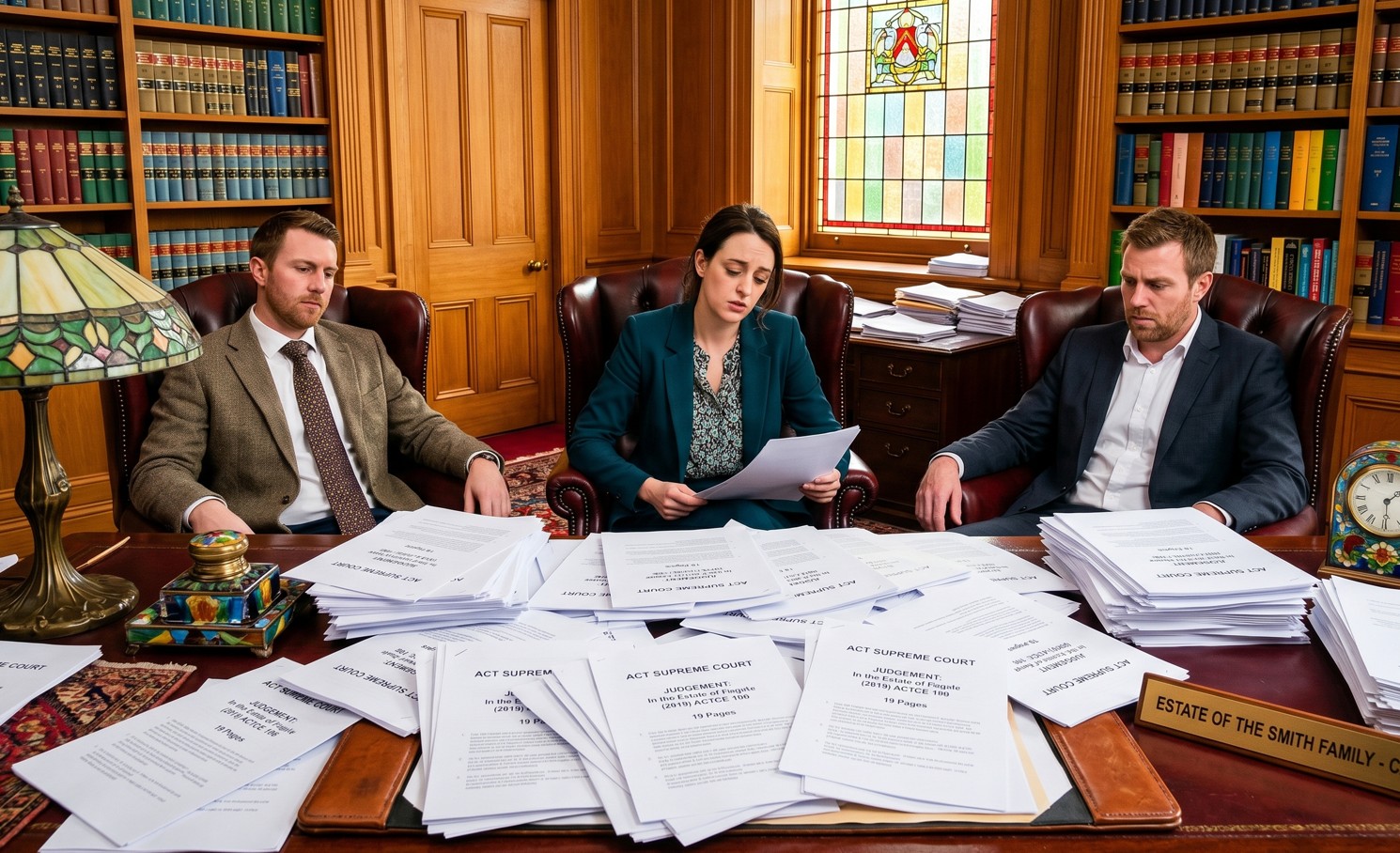
What happens if you forget to deal with the death of a child in your Will? The grandchildren end up in court. The Koppie case resulted in a 19-page legal decision because the Will did not contain a bloodline gifting clause.
Legal Consolidated's 3-Generation Testamentary Trust Wills include a bloodline gifting clause as standard.
What happens to a child's share in a Will when they die before me?

A 3-Generation Testamentary Trust Will is not a static document; it is a sophisticated instrument that self-corrects continuously. It protects your family from what you cannot control: the date of your death, your final asset value, and the laws they invent after you are gone. It is a fortress.
There are three great uncertainties in building your Will. You do not know:
1. the date of your death.
2. what assets you will own.
3. what the law will be.
That is why building a Will requires flexibility. Flexibility reduces the 32% tax on your super when you die. Flexibility allows your beneficiaries to turn on a Divorce Protection Trust or Bankruptcy Trust after you are dead.
One other uncertainty is what happens if a beneficiary dies before you. There are two choices:
1. Does the asset go back to the 'pot' to be divided up with the remaining living beneficiaries who outlasted you?
2. Or, do the dead child's own children get what the dead beneficiary would have got?
What is a bloodline gifting clause in a Will?
If a child dies before you, their gift does not disappear. It passes automatically to their children — your grandchildren. This is a bloodline gifting clause. All Legal Consolidated Wills include this anti-lapse clause.
The Legal Consolidated wording is plain:
The Children of the Primary Beneficiary
Unless my Will otherwise directs, if any Primary Beneficiary dies before me or dies before reaching the Age of Majority, leaving children, then those children (as each of those children reach the Age of Majority) take what their parent would have taken. Such children then maintain the trusts their parent would have maintained, had they reached the Age of Majority, equally as tenants in common.
No court application. No family argument. Automatic.
Other names for a bloodline gifting clause
The bloodline gifting clause is also referred to as a:
-
per stirpes clause; Latin for 'down the bloodline'. (One of my students, who speaks fluent Latin, has corrected me to say it literally means 'by roots' or 'by branch'. I find that unhelpful.)
-
substitution clause
-
anti-lapse clause
-
lineal descent clause
Lineal descent ensures assets pass down the bloodline. This prevents grandchildren from being excluded if their parent dies before the Will maker. Old Wills may use the Latin term per stirpes.
Example of a bloodline gifting clause in a Will
You have three children. Colin is one of them. Colin dies before you in a car accident. Colin has two children of his own — your grandchildren.
Because your Legal Consolidated Will contains a bloodline gifting clause, Colin's two children step into Colin's shoes. Each receives 1/6 of your estate. Your two surviving children each receive 1/3.
Now take the same example. This time, Colin and both his children die in the same accident. The bloodline ends. Colin's share goes back to the pot. Your two surviving children split everything 50/50.
Both outcomes are automatic. You do not need to update your Will.
Divorce Protection Trust in Wills – stop children-in-laws taking your money
What happens without a bloodline clause: In the Estate of Koppie [2019] ACTSC 106
In the Estate of Koppie [2019] ACTSC 106, the mother's Will used the words 'children as shall survive me.' No bloodline clause. No substitution clause. Nothing.
When one of her four children died before her, the grandchildren had no entitlement under the Will.
They were forced to go to court to try to rely on the little-used Section 31(1) of the Wills Act 1968 (ACT). This is a statutory safety net to inherit their dead parent's share.
In a 19-page legal decision, the court found for the grandchildren. But the family still had to litigate to get there.
The lesson is not that the grandchildren lost. The lesson is that they had to fight at all. And the estate paid all the lawyers' fees.
A Legal Consolidated Will makes that fight unnecessary.
Bankruptcy Trust in Wills
Overriding the lineal descent clause
You maintain total control when you build a 3-Generation Testamentary Trust Will. You can override the bloodline gifting clause.
For example, you leave $10,000 to a friend. You do not know his children. If your friend dies before you, you want the gift to fail. In this case, you merely override the lineal descent requirement for that specific gift. The $10,000 stays in your estate to be divided among your Residuary Beneficiaries.
Building a Legal Consolidated 3-Generation Testamentary Trust Will handles these exact uncertainties automatically. It ensures the right people get the money, with the flexibility to protect it from the Family Court and bankruptcy courts after you die.
Does your Will protect your grandchildren if a child dies before you?'
If you do not have a 3-Generation Testamentary Trust Will, speak to your accountant, lawyer and financial planner. Ask them one question: Does my Will have a bloodline gifting clause?
Build a 3-Generation Testamentary Trust Will online. The building process is free. Read the hints. Answer the questions. Lock and build.
Protects against death duties, divorce, and bankruptcy of children, and a 32% tax on superannuation. Build online with free lifetime updates:
Couples Bundle
includes 3-Generation Testamentary Trust Wills and 4 POAs
Singles Bundle
includes 3-Generation Testamentary Trust Will and 2 POAs
Death Taxes
- Australia's four death duties
- 32% tax on superannuation to children
- Selling a dead person's home tax-free
- HECs debt at death
- CGT on dead wife’s wedding ring
- Extra tax on Charities
Vulnerable children and spendthrifts
- Your Will includes:
- Divorce Protection Trust if children divorce
- Bankruptcy Trusts
- Special Disability Trust (free vulnerable children in Wills Training Video)

- Guardians for under-18-year-old children
- Considered person clause to stop Will challenges
Second Marriages & Challenging Will
- Contractual Will Agreement for second marriages
- Wills for blended families
- Do Marriages and Divorce revoke my Will?
- Can my lover challenge my Will?
- Make my Will fair: hotchpot clauses v Equalisation?
What if I:
- have assets or beneficiaries overseas?

- lack mental capacity to sign my Will?
- sign my Will in hospital or isolating?
- lose my Will or my home burns down?
- have addresses changed in my Will?
- have nicknames and alias names?
- want free storage of my Wills and POAs?
- put Specific Gifts in Wills
- build my parent's Wills?
- leave money to my pets?
- want my adviser or accountant to build the Will for me?
Assets not in your Will
- Joint tenancy assets and the family home
- Loans to children, parents or company
- Gifts and forgiving a debt before you die
- Who controls my Company at death?
- Family Trusts:
- Changing control with Backup Appointors
- losing Centrelink and winding up the Family Trust
- Does my Family Trust go in my Will?
Power of Attorney
 Money POAs: NSW, VIC, QLD, WA, SA, TAS, ACT & NT
- be used to steal my money?
- act as trustee of my trust?
- change my Superannuation binding nomination?
- be witnessed by my financial planner witness?
- be signed if I lack mental capacity?
- Medical, Lifestyle, Guardianships, and Care Directives:
- Company POA when directors go missing, insane or die
After death
- Free Wish List to be kept with your Will
- Burial arrangements
- How to amend a Testamentary Trust after you die
- What happens to mortgages when I die?
- Family Court looks at dead Dad's Will